
The most important question in Christian education is often the one we reach too late.
We begin with behaviour, learning needs, classroom disruption, staff fatigue, technology, policy, compliance and strategy. These pressures are real. Those working in our schools day after day know the cost of carrying them. But beneath every response, every plan and every policy, there is a question that must come first: Who is the person before us?
This was the question at the heart of my presentation at the Catholic Schools NSW Behaviour and Diverse Learning Symposium: Beyond Therapy Culture in Catholic Education: Who is the person we are caring for?
The symposium brought together serious voices across behaviour management, neuroscience, diverse learning and virtue education. It was valuable because it pushed us beyond technique and into the deeper work of formation, discernment and institutional responsibility.
A highlight for me was participating in the closing panel discussion, chaired by CSNSW CEO Dallas McInerney. The conversation moved through behaviour management, neuroscience, devices, virtue education, and the growing pressure on schools to respond wisely to technologies that are changing the inner lives of children.
The device question became especially important.
Across Australia, a few decades ago we placed iPads and other devices into the hands of very young students with extraordinary confidence. There were good intentions behind this. Creativity. Access. Engagement. Future readiness. Many educators worked hard to use these tools well.
Now we are facing what many parents, teachers and clinicians have been noticing for many years. Device use affects attention, learning, socialisation, imagination, emotional regulation and development. Dr Mark Williams keynote at the symposium was particularly challenging here, because he made clear that this is not a vague concern about screen time, but a serious neuroscientific concern about how devices shape memory, empathy, addiction pathways, facial expression recognition, and the child's capacity to attend to the real world.
During the panel discussion I shared something I have carried for a long time as a counsellor and therapist.
I have lost count of how many young adults have sat with me in their early to late twenties describing significant pornography addiction. Again and again, when we trace the story back, the first exposure happened much earlier than they understood at the time. For so many, it began through school devices given to them without enough restriction, supervision or formation around what those devices opened up.
A device in the hands of a child is never merely a learning tool. It's a formation mechanism that shapes attention. It trains desire. It opens worlds of secrecy, novelty, escape and stimulation. It can support learning. It can also form appetites long before the child has the maturity to understand what is happening.
The question I asked in the panel discussion, and the one I keep pondering, is simple and uncomfortable:
Did we really need decades of neuroscience to tell us this would have consequences?
The evidence is of course important. We should receive it humbly and act on it with courage. At the same time, I wonder what was already missing in the original decision making.
I think the problem was a thin anthropology.
If we had been more sharply focused on the nature of the human person, we may have moved with greater caution. We may have asked different questions. We may have placed the child before the device.
From a Christian perspective, the child is an embodied, relational, spiritual person made in the image of God. A child comes into the world through relationship and for relationship. The brain develops through attachment, eye contact, voice, touch, play, rhythm, movement, correction, repair and belonging.
The human person is formed in the gaze of another.
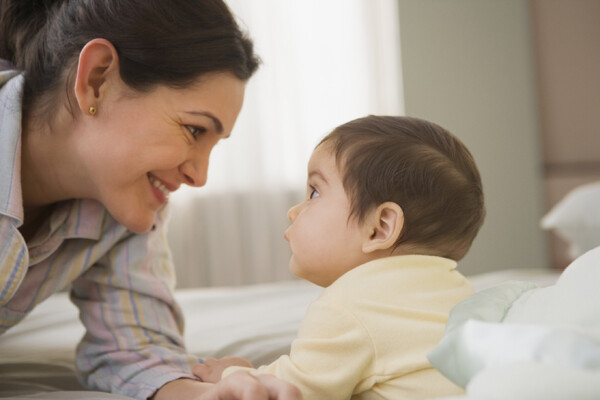
This is why attention matters so much. What a child repeatedly attends to begins to shape not only the architecture of the brain, but the interior life of the person.
Neuroscience gives us the language of neuroplasticity. Catholic anthropology gives us the fuller vision. The child is not merely a developing brain, but a subject: a person capable of consciousness, freedom, truth, love, and the gift of self. Every act of attention participates in that formation.
Attention is one of the first schools of self-possession. What enters a child's awareness becomes part of the interior material from which the child learns to choose, to love, to pray, to suffer, and to respond to reality.
Formation is the gradual awakening of the person to truth and goodness.
As Karol Wojtyła observed,
“bringing into consciousness the content suppressed in the subconscious and, especially, thoroughly objectivizing this content, is one of the important tasks of education and morality”
(Person and Act and Related Essays, trans. Grzegorz Ignatik [Washington, DC: The Catholic University of America Press, 2021], 199).
Prayer trains attention toward God.
Silence trains attention toward the interior life.
Liturgy trains attention toward the sacred.
Loving discipline trains attention toward ordered freedom.
Good teaching trains attention toward truth.
Friendship trains attention toward communion.
When these are lived well, they do more than improve focus. They help the child receive the world with wonder, govern the self with freedom, and give the self in love.
Devices train attention too.
They train it toward speed, interruption, reward and escape. Over time, ordinary human presence can begin to feel slow. Stillness can feel unbearable. The classroom can feel dull because the nervous system has been formed in a different environment.
This changes how we think about behaviour.
Behaviour is rarely random. It is relational and meaningful. Beneath dysregulation, withdrawal, aggression, compulsive stimulation seeking or emotional volatility, there is often a nervous system trying to adapt to a world it cannot fully process.
And beneath much difficult behaviour there is the physiological and psychological encounter with that primary emotion called shame.
A child who feels exposed, stupid, rejected or unseen will protect himself before he reflects. Some children attack. Some withdraw. Some perform. Some disappear into screens. Internalised shame narrows the heart because the child feels unsafe in being known.
Our education systems have to be able to see this reality in everything.
A genuinely Catholic standard for mental health and wellbeing in education must begin with an adequate and expansive conceptualisation of what it means to be human. Every policy, behaviour framework, counselling program, technology decision and wellbeing initiative should be tested against the same question:
Does this serve the formation of the child as an embodied, relational person, made in the image of God and called into communion, truth, freedom and love?
That question matters now more than ever.
Artificial intelligence, virtual learning, immersive technologies and new behavioural systems and fancy wellbeing strategies will keep arriving. Some will be useful. Some will be harmful. All of them will carry assumptions about the human person.
We have already seen what happens when innovation moves faster than anthropology.
The way forward is slower, more discerning and more human. Catholic schools have the opportunity to lead here. We can recover a vision of education that places the formation of character and virtue before efficiency, relationship before performance, and the dignity of the child before the promise of the next tool.
The child must come before the system.
The person must come before the program.
And every decision we make for the vulnerable under our care must begin with the truth of who they are.