
This has been a heavy season.
Here in Australia, the Bondi Beach terror attack at a Hanukkah festival has been a deep trauma for many and a shock to the whole country. Across the world, violence and war continue to unfold. And each year, as Christmas approaches, these wider shadows have a way of visiting us closer to home. In my work providing counselling and therapy, I am acutely aware that this time of year often brings family conflict rather than unity, and loneliness rather than belonging, and exhaustion rather than peace.
Advent does not look away from any of this. It does not offer platitudes or quick comfort. It places us in the dark and asks us to wait there, honestly.
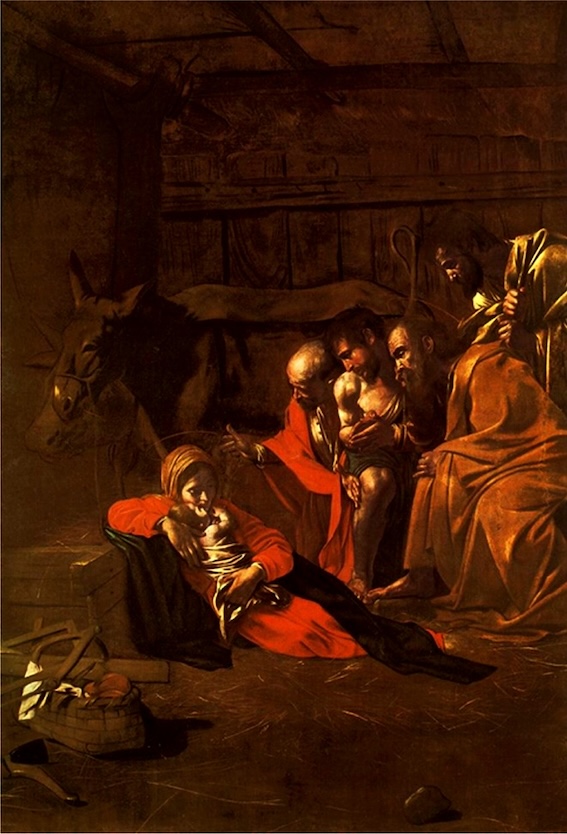
The weight we carry
Waiting, psychologically and spiritually, is not a passive state. It confronts us with what we most struggle to relinquish. Control. Certainty. The belief that if we could just manage things better, everything would settle.
Much of human suffering intensifies around this point. When tragedy strikes or relationships fracture, something in us tightens. We want answers. We want resolution. We want to fix what feels unbearable. This impulse is deeply human, but it is also where anxiety, despair, and burnout quietly take root.
This is where the language of surrender enters. And this is where it is often misunderstood.
Surrender misunderstood
Surrender is frequently imagined as resignation or weakness. As though to surrender means to stop caring or to give up responsibility. Yet both good therapy and the Christian spiritual tradition tell a very different story. At their best, they are describing the same interior movement.
In contemporary psychology, approaches such as Acceptance and Commitment Therapy and mindfulness based practices have demonstrated again and again that healing begins not when we eliminate pain, but when we stop fighting our interior experience. When we allow grief to be grief. Fear to be fear. Sadness to be sadness. When we meet the present moment without judgment and without the frantic demand that it be other than it is.
This is not apathy. It is courage.
What children still know
From a psychological perspective, healing often looks surprisingly simple. Children show us this every day. When they are overwhelmed, they cry. They let the feeling move through them. And then, quite often, they return to play. Their suffering does not become a prison because they do not try to control it.
As adults, we complicate what was once natural. We suppress. We ruminate. We overfunction. We carry a quiet belief that if we could just manage ourselves better, if we could stay ahead of pain, we would finally feel safe. But this constant effort to manage our inner world often keeps us stuck.
Part of healing, then, is not learning something new, but remembering something old. How to feel without panic. How to receive without resistance. How to stay present without needing to fix everything.

Psychology as echo
This is where I find myself returning, again and again, to an enduring conviction. The best of what we call therapy is often an echo of something older and deeper in the Christian life. When we practise acceptance, we are not baptising passivity. We are practising receptivity. We are learning to stop gripping reality with clenched hands so that we can actually meet it, and be met in it.
“Every theory of psychology is secretly theology in disguise.”
Greg Bottaro, The Personalist Cure: John Paul II’s Blueprint for a Catholic Standard of Psychology
Beneath every therapeutic model sits an understanding of the human person. What freedom is. What peace is. What love is. And in that sense, it should not surprise us that many evidence-based approaches have converged on something the saints have been teaching for centuries.
Mindfulness Based Stress Reduction, developed by Jon Kabat Zinn, is now well researched and widely used to help people cope with stress, pain, and illness by cultivating a nonjudgmental awareness of the present moment. In clinical language, it is about learning to stay with what is here, rather than being consumed by what might be or what should have been.
But if you have spent time with the Catholic spiritual tradition, you will recognise the shape of this. The steady return to the present moment. The surrender of imagined control. The willingness to receive today as the place where God can actually meet us.
Receiving what we did not choose
This is why so many people find themselves nourished by writers like Jacques Philippe in Interior Freedom and Searching for and Maintaining Peace. His recurring invitation is simple and firm. Stop wrestling life into submission. Receive the moment. Consent to reality. Trust that God is present in what you did not choose.
Walter Ciszek says it with a kind of hard-won honesty that only suffering can produce.
“…The plain and simple truth is that God’s will is what he actually wills to send us each day, in the way of circumstances, places, people, and problems. The trick is to learn to see that, not just in theory, or not just occasionally in a flash of insight granted by God’s grace, but every day…”
Walter J. Ciszek, He Leadeth Me
This is where surrender and hope become inseparable.
Hope that does not deny
Hope is not optimism. It is not pretending things are fine. It is not denying pain or forcing ourselves into cheer. Hope grows from trust. Trust that meaning has not been exhausted. Trust that God is present even when clarity is absent. Trust that our lives are not confined to the narrow limits of what we can control.
Psychologically, this posture brings relief to the nervous system. When we stop fighting reality, the body softens. The breath deepens. The mind loosens its grip. From that place, we are far more capable of acting wisely and lovingly. Not reactively or compulsively, but in alignment with what truly matters.
Spiritually, the same movement opens us to Emmanuel: God with us. Not God who removes all darkness, but God who enters it.
Advent’s invitation to slow down
Advent trains us in this way of being. Mary receives a word she cannot fully understand. Joseph sets aside his own plans after listening to a voice that comes to him in the night. Neither is strong because they are certain. They are strong because they are receptive.
And this can show us a new way of approaching Christmas. Many people feel pressure to perform joy, smooth over tension, and carry others while ignoring their own fatigue or grief. But the invitation of Advent is quieter and more demanding:
Slow down.
Attend to what is present in your body. Notice where you are holding tension or bracing against what is. Name honestly what you are feeling without trying to resolve it immediately. And then, in prayer, offer it. Not with polished words, but with trust.
Where healing begins
Integrated healing happens precisely here. When body, mind, and spirit are allowed to move together. When we receive what is given, even when it is painful, and allow that reception to guide our next faithful step. Sometimes that step is action. Sometimes it is rest. Sometimes it is a difficult conversation. Sometimes it is simply staying.
Surrender does not mean we stop caring. It means we care without trying to be God.
And this is where hope slowly forms,with the steady confidence that love is still at work, even now.
The Christian claim of Christmas is not that suffering disappears. It is that God draws near within it.
As we wait for Christmas Day, you may feel tired. Or unsettled. Or quietly longing for something you cannot yet name. Let that be your prayer.
You do not need to have everything resolved.
You are asked only to remain open.
In surrender, the heart widens. In receiving, peace begins. And in the waiting, often unnoticed at first, God is already coming toward us.